

Sweet Almond Oil: Your New Skincare Superstar
Did you know that Cleopatra, famed for her legendary beauty, reportedly relied on almond oil as a cornerstone of her ritual? This ancient secret has now become a modern phenomenon for a very good reason.
You are about to discover a natural powerhouse that can transform your routine. This guide explores the remarkable properties that make it a versatile solution for your wellness.
From ancient Ayurvedic practices to today’s science, this substance has maintained its stellar reputation across centuries. Its unique composition makes it suitable for a wide range of applications.
Understanding what makes sweet almond oil exceptional empowers you to make informed choices. You will learn how to harness its full potential for radiant skin and overall vitality.
Table of Contents
Introduction to Almond Oil and Its Versatility
When nearly half of each almond’s weight consists of beneficial oil, it’s no wonder this natural extract serves so many purposes in daily life. The versatility of sweet almond oil extends far beyond basic skincare, offering solutions for beauty, wellness, and culinary needs.
Originally cultivated in the Middle East, almonds now thrive in California’s ideal climate. This state produces the majority of the world’s supply. The growing recognition of health advantages has doubled production over two decades.
The impressive nutrient content includes healthy fats, vitamins, and minerals. These components contribute to the wide-ranging uses of this natural product. You can incorporate it into various aspects of your routine.
From massage applications to cooking ingredients, this adaptable substance meets diverse needs. The American Heart Association acknowledges the heart-healthy properties of almonds. This validation supports its role in comprehensive wellness practices for your body.
Understanding Almond Oil Production and Types
Not all almond oils are created equal, with processing techniques creating significant differences. The extraction method determines the final product’s quality and nutritional content.
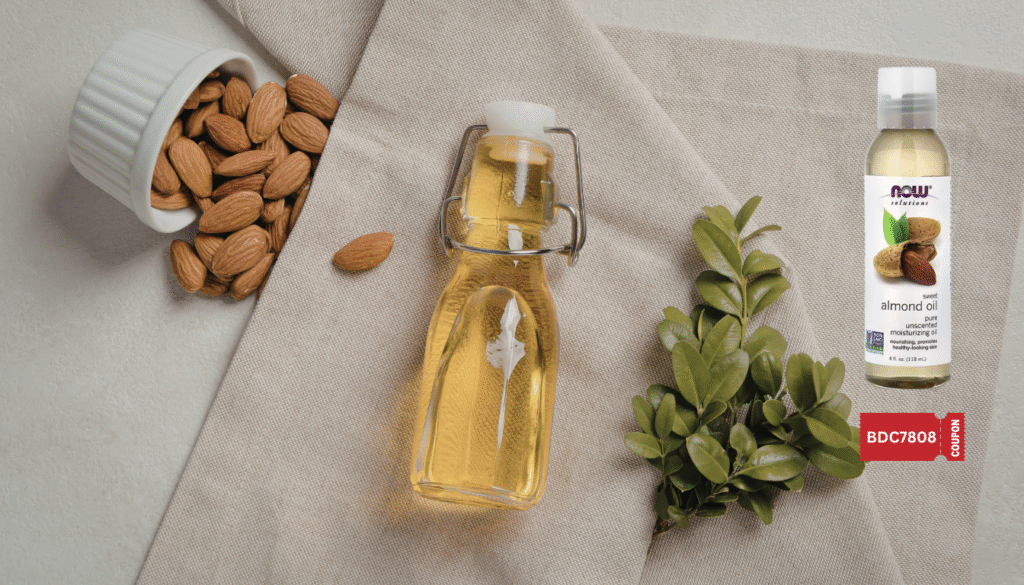
Expeller-pressed methods preserve more nutrients by using minimal heat. This process involves grinding almonds and using mechanical pressure.
Chemical extraction yields more oil but sacrifices quality. This method uses solvents that can affect the final product’s purity.
Extraction Methods and Processing
You’ll find two main categories of almond oil products. Unrefined varieties retain natural flavors and nutrients through gentle processing.
Refined options undergo additional treatment with high heat and chemicals. This creates a neutral-tasting product with higher heat tolerance.
Sweet vs Bitter Almond Oil
These two types come from different almond varieties. Sweet almond oil is safe for both topical use and consumption.
Bitter almond oil requires special refining to remove natural toxins. It’s suitable only for external applications like massage and aromatherapy.
| Feature | Sweet Almond Oil | Bitter Almond Oil |
|---|---|---|
| Source Variety | Prunus amygdalus dulcis | Prunus amygdalus amara |
| Safety Level | Safe for internal and external use | External use only after refining |
| Primary Applications | Cooking, skincare, haircare | Soaps, aromatherapy, massage |
Choosing between these types depends on your intended application. Always verify the source and processing method before purchase.
Exploring Sweet Almond Oil Benefits for Skin and Hair
Modern research confirms what ancient healers knew: this natural extract offers exceptional skincare advantages. The combination of vitamins and fatty acids creates a powerful formula for maintaining healthy skin.
Your complexion receives deep nourishment from essential nutrients. These components work together to improve texture and tone over time.
Skin Soothing and Healing Properties
This natural product provides significant relief for various skin conditions. Its anti-inflammatory properties help reduce redness and irritation effectively.
Scientific studies demonstrate impressive results for dermatitis symptoms. Regular application can soothe burning, stinging, and itching sensations.
The vitamin E concentration offers protection against environmental damage. Research suggests it may help prevent UV-related harm to your skin cells.
For those with acne-prone skin, the antibacterial properties provide gentle care. They help minimize breakouts without causing excessive dryness.
You can incorporate this versatile product into your daily routine easily. It absorbs quickly while delivering lasting moisture to your face and body.
Harnessing Almond Oil for Hair and Beauty
Many people overlook the hair-transforming potential of this versatile natural extract. Your strands can receive comprehensive care that addresses multiple concerns simultaneously.
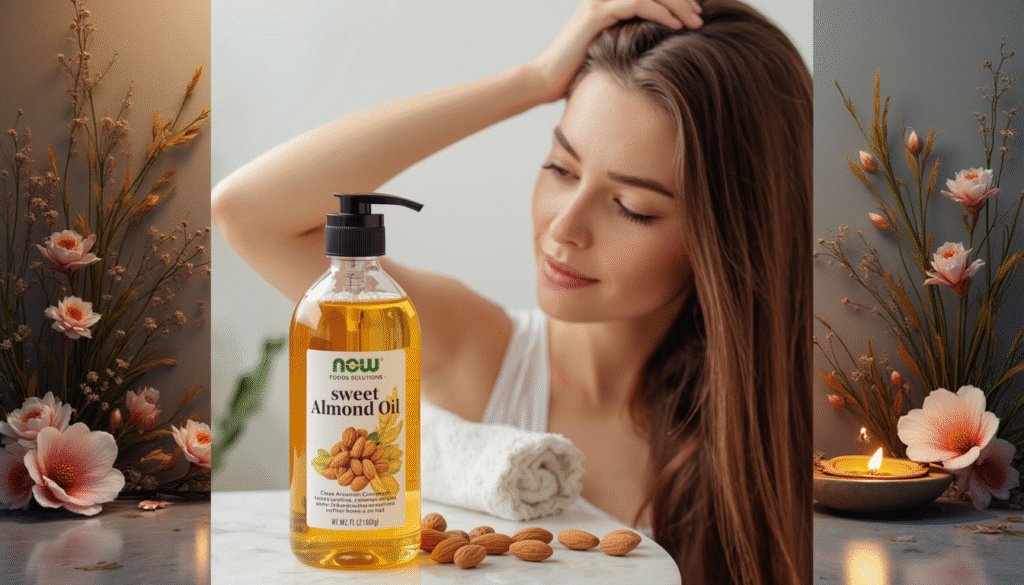
The properties make it suitable for all hair types. Whether you address dryness or seek enhanced natural beauty, this solution works effectively.
Scalp Health and Dandruff Solutions
When you apply this product as a scalp treatment, its antibacterial and fungicidal properties balance yeast that causes flaking. This action soothes inflammation and irritation effectively.
If you experience itching or redness, direct application may help reduce discomfort. The formula easily soaks into your skin and follicles.
This hydration cleanses buildup that can impede healthy growth. Leaving it on for 20 minutes or overnight maximizes absorption.
Repairing and Smoothing Damaged Hair
Rich in fatty acids, this substance adds essential moisture and elasticity to your strands. At the cellular level, it may help smooth and repair damage.
For managing frizz, use a pea-sized amount on ends before styling. This adds control without weighing down your appearance.
When incorporated into shampoo, it gives a natural, healthy-looking shine. Some evidence suggests blends containing almonds may help reduce loss.
The vitamin B-7 content supports strength and prevents breakage over time. Your hair receives protection from UV damage with natural SPF properties.
Culinary Uses and Heart Health Perks
Your kitchen cabinet might hold the key to better heart health with this versatile ingredient. Beyond topical applications, this plant-based product offers remarkable advantages for your cardiovascular system when incorporated into your diet.
Cooking with Almond Oil
Understanding proper heating techniques maximizes the nutritional value of this ingredient. Unrefined varieties work best for salad dressings and low-heat baking.
Their delicate nature preserves essential compounds that benefit your body. For sautéing or roasting, refined versions tolerate temperatures up to 420°F.
The mild flavor makes it easy to incorporate into various dishes. Use it as a finishing touch to add subtle nutty notes and health advantages.
Heart-Smart Fats and Nutrient Benefits
This product contains predominantly monounsaturated fatty acids that support cardiovascular wellness. Research shows these compounds can improve cholesterol levels effectively.
Just one tablespoon provides 10 grams of heart-healthy fats. It also delivers 27% of your daily vitamin E requirements.
Studies indicate that replacing saturated fats with this option may lower blood pressure. The antioxidant content helps reduce inflammation throughout your system.
| Cooking Method | Recommended Type | Maximum Temperature | Best Uses |
|---|---|---|---|
| Salad Dressings | Unrefined | Room Temperature | Preserves nutrients and flavor |
| Low-Heat Baking | Unrefined | 300°F (150°C) | Adds subtle nutty essence |
| Sautéing | Refined | 420°F (215°C) | Neutral taste for cooking |
| Finishing Oil | Unrefined | Room Temperature | Enhances flavor and nutrition |
The omega-3 content in this product supports multiple body functions. Regular consumption may contribute to overall wellness over time.
Integrating Almond Oil into Your Daily Routine
The true power of this plant-based treasure reveals itself when you weave it seamlessly into your daily habits. You can enjoy its advantages through both topical applications and dietary inclusion.
Incorporating into Skincare and Dietary Practices
Start by testing a small amount on your inner wrist to check for sensitivity. This simple step ensures safe use before broader application.
For your skin care regimen, mix a few drops into your favorite lotion. You can also create a gentle scrub by combining it with sugar.
Dietary integration is equally straightforward. Add it to smoothies or use it in salad dressings. The mild flavor complements many dishes without overpowering them.
Choosing Quality Almond Oil Products
Look for unrefined or virgin varieties when shopping. These options retain more of the natural nutrients that benefit your health.
Check expiration dates carefully before purchasing. Fresh products deliver maximum effectiveness and safety.
Proper storage extends the shelf life of your purchase. Keep it in a cool, dark place away from heat sources.
Most health food stores and reputable online retailers carry quality options. You’ll also find it as an ingredient in various personal care items.
Conclusion
The journey through almond oil’s properties reveals a comprehensive solution for modern wellness needs. You’ve discovered how this natural extract serves multiple purposes across skincare, haircare, and dietary practices.
Rich in vitamins and fatty acids, it offers synergistic advantages for your complexion and strands. The anti-inflammatory and antioxidant properties work together to address various concerns effectively.
Remember to choose quality products from reputable sources for optimal results. Testing for sensitivity ensures safe integration into your daily routine. This time-tested approach supports your overall vitality naturally.